
At a 52-building apartment community in Cordova, Tennessee, TSG documented shingle-roof conditions using a community-wide drone and ground survey, followed by a roof walk at one selected building. The resulting condition report separated immediate repair concerns from recurring debris removal and further assessment of older roof areas.
This case study summarizes the October 16, 2026 report. It documents an assessment and proposed work; it does not present completed repairs, verified leak resolution or measured savings. The property’s identity and proposal pricing are withheld.
What we inspected—and what we did not
- Property
- 52-building multifamily community · Cordova, Memphis area
- Roof systems
- Asphalt shingles, including newer gray architectural shingles and older brown-shingle areas
- October 8, 2026
- Community-wide drone and ground survey; 21 photographs recorded
- October 14, 2026
- Targeted roof walk at one building; 20 photographs recorded
- Assessment limits
- The aerial survey was not a hands-on inspection of all 52 roofs. Conditions observed at the walked building should not be assumed to exist at every building.
The records provide a dated view of visible conditions. They do not establish the condition of every concealed component or a remaining service life for every roof.
Priority repairs at the walked building
The field report recorded deteriorated decking near a rear-slope box vent and displaced shingles leaving an open rake-edge detail beside a plumbing vent. These were identified as priority repair areas because they could allow water entry.
The proposed scope included replacing affected decking and shingles, resetting the vent, rebuilding the open edge and addressing the adjacent flashing. The extent of concealed deterioration would need confirmation during repair; a photograph alone does not establish the full condition of the decking below.
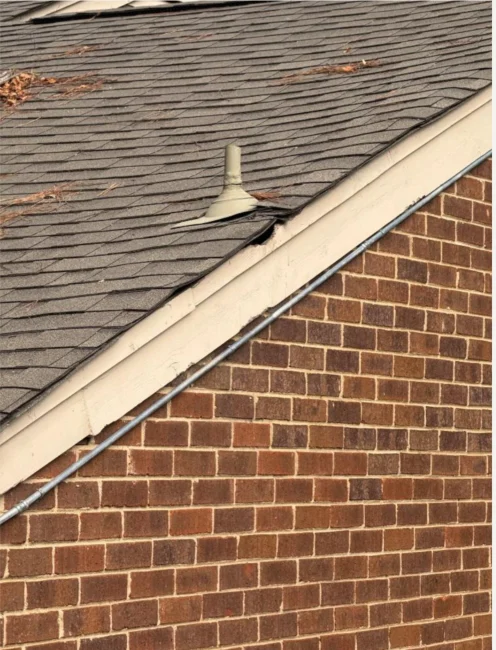
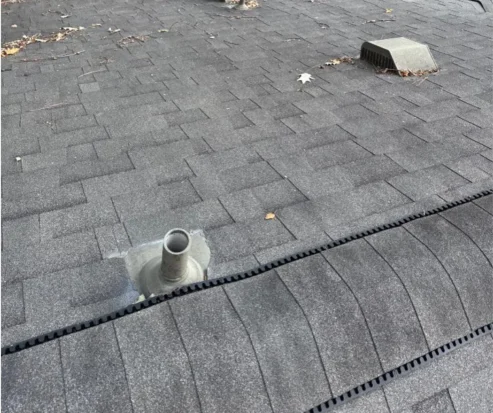
Previously patched plumbing vent boots were also included in the proposed repair scope. The report’s purpose was to identify these components before further deterioration, not to claim that every patched boot was actively leaking.
A recurring debris problem across the community
The survey documented leaves, limbs and pine needles on roof slopes, at eaves and around roof-to-wall junctions. Tree cover was an important part of the maintenance discussion: a one-time cleanup would not address recurring seasonal debris.
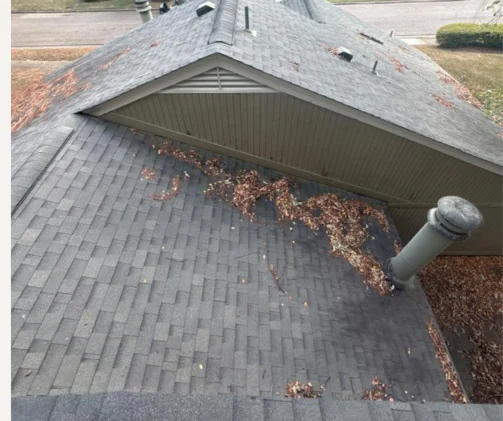
The report recommended clearing accumulated debris and available drainage components, and coordinating tree work with an arborist. The exact cleaning method, access arrangements and work scope should be selected for each roof’s condition.
Older roofs need their own condition records
Older brown-shingle areas beneath pine trees showed needle accumulation and surface growth identified in the report as lichen and algae. Those observations prompted recommendations for closer assessment and measurement to support replacement planning.
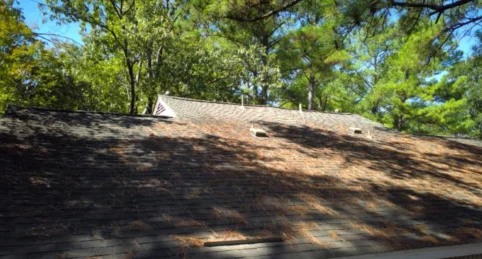
Appearance alone was not used to assign a replacement date to every building. A building-by-building record can distinguish roofs needing near-term work from those suitable for continued maintenance, with budgets updated as more information becomes available.
Sample condition-report summary
This condensed, anonymized summary shows how observations become proposed next steps. It is not the full client report or a quote.
- Priority repairs · walked building
- Documented decking deterioration and an open rake-edge detail. Proposed action: confirm extent and repair affected materials and flashing.
- Preventive work · walked building
- Previously patched vent boots and weathered edge/fascia details. Proposed action: replace affected boots and define localized edge and trim repairs.
- Recurring maintenance · community
- Debris and overhanging limbs visible in surveyed areas. Proposed action: roof and drainage cleaning, tree coordination and repeat condition photographs.
- Further evaluation · older roof areas
- Older shingles beneath the canopy. Proposed action: closer condition assessment and measurements before setting replacement scopes or timelines.
- Follow-up · walked building
- Mixed ridge and box vents were noted. Proposed action: assess attic ventilation before deciding whether changes are needed.
The recommended next step
The proposal paired localized priority repairs with a four-visit annual maintenance option tailored to the site’s tree cover. That frequency was a recommendation for this property, not a universal requirement for apartment roofs.
The proposed care plan included debris removal, roof observations, photographs by building and approval of additional work beyond the agreed scope. More extensive repairs, tree work and replacement planning would be defined separately.
For management, the useful output is a record of what was observed, where it was found, what needs attention first and what still requires investigation. Future repair photographs and follow-up inspections can then be compared with that starting record.
Planning roof work at an occupied apartment community
Identify the affected building and roof area, provide any interior leak history, and establish a site contact and access arrangements. Keep resident notices, work authorization and maintenance records connected to each building.
Explore multifamily roofing services, roof inspections, maintenance planning and roof repair for your property.
START WITH YOUR PROPERTY
Request a multifamily roof assessment in the Memphis area
Tell us the location, approximate building count, known roof concerns and any available inspection or leak records. We will review the scope, access and availability before confirming a visit.
Request a roof assessmentSource: TSG roof condition report dated October 16, 2026, based on the October 8 survey and October 14 targeted roof walk. Selected photographs are cropped to show roof details. Property name, addresses and client-specific pricing are omitted. Recommendations are site-specific and do not establish completed work or guaranteed outcomes.