
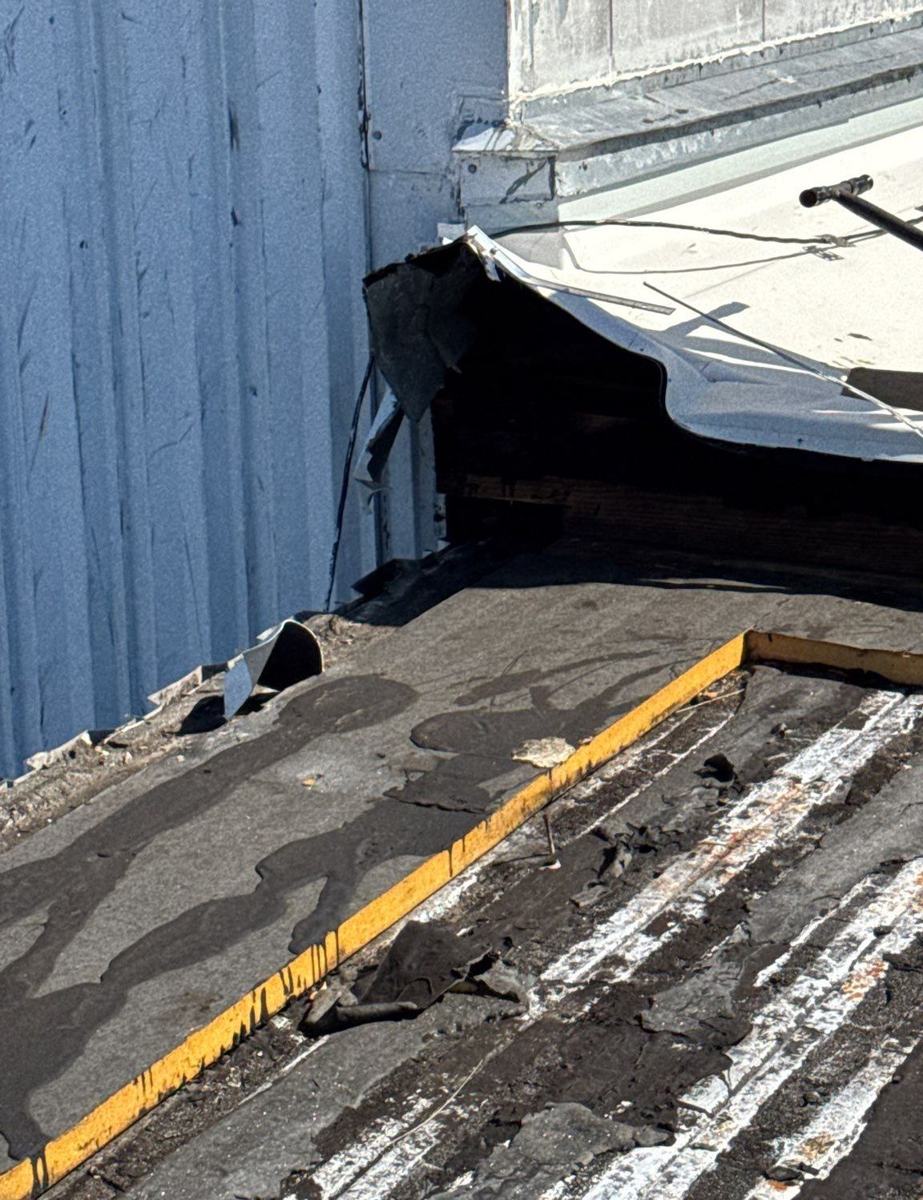
A commercial roof can sustain substantial damage without a reported leak inside. During a recent commercial roof inspection at a food processing facility in Memphis, we found separated roof layers, exposed underlying materials and pronounced buckling on an aging modified-bitumen section. Facility personnel reported no leaks beneath this section and had not recognized the extent of the damage before the inspection.
If your building experienced the August 22, 2026 windstorm, the absence of an interior leak report does not tell you whether the roof was damaged. This article covers what we found, how wind affects a low-slope roof, and what a post-storm assessment should document.
At a glance
- Facility
- Food processing facility · Memphis, Tennessee
- Inspected section
- Approximately 20,000 square feet · Modified bitumen
- Age and warranty
- Approximately 30 years old, as reported · No existing warranty
- Leaks beneath this section
- None reported
- Discovery
- October 2026 inspection
- Project status
- Inspection and proposal development; replacement has not been completed by TSG.
The August 22, 2026 Memphis windstorm
On the evening of August 22, 2026, a bow echo thunderstorm affected Memphis and Shelby County. In its August 23 restoration update, Memphis Light, Gas and Water reported straight-line winds of more than 70 mph and impacts to more than 140,000 customers. [1]
That storm is relevant context for this roof. It does not establish the wind speed at the property or prove when the damage happened. Connecting a specific storm to a roof failure takes evidence about local conditions, the roof’s earlier condition and the observed failure pattern.
How wind damages a commercial roof
As wind moves around and over a building, pressure differences can create upward forces on roof components. FEMA notes that the border of a low-slope roof is frequently at greater risk from wind uplift and wind-driven rain. When an assembly cannot resist those forces, membrane, flashing and edge metal can lift, peel or shift. [2]
Wind resistance depends on the attachment to the deck, the bond between layers, perimeter and flashing details, and the condition of underlying materials. An assessment should evaluate the assembly and its connections, including where one roof system meets another.
What we found on this roof
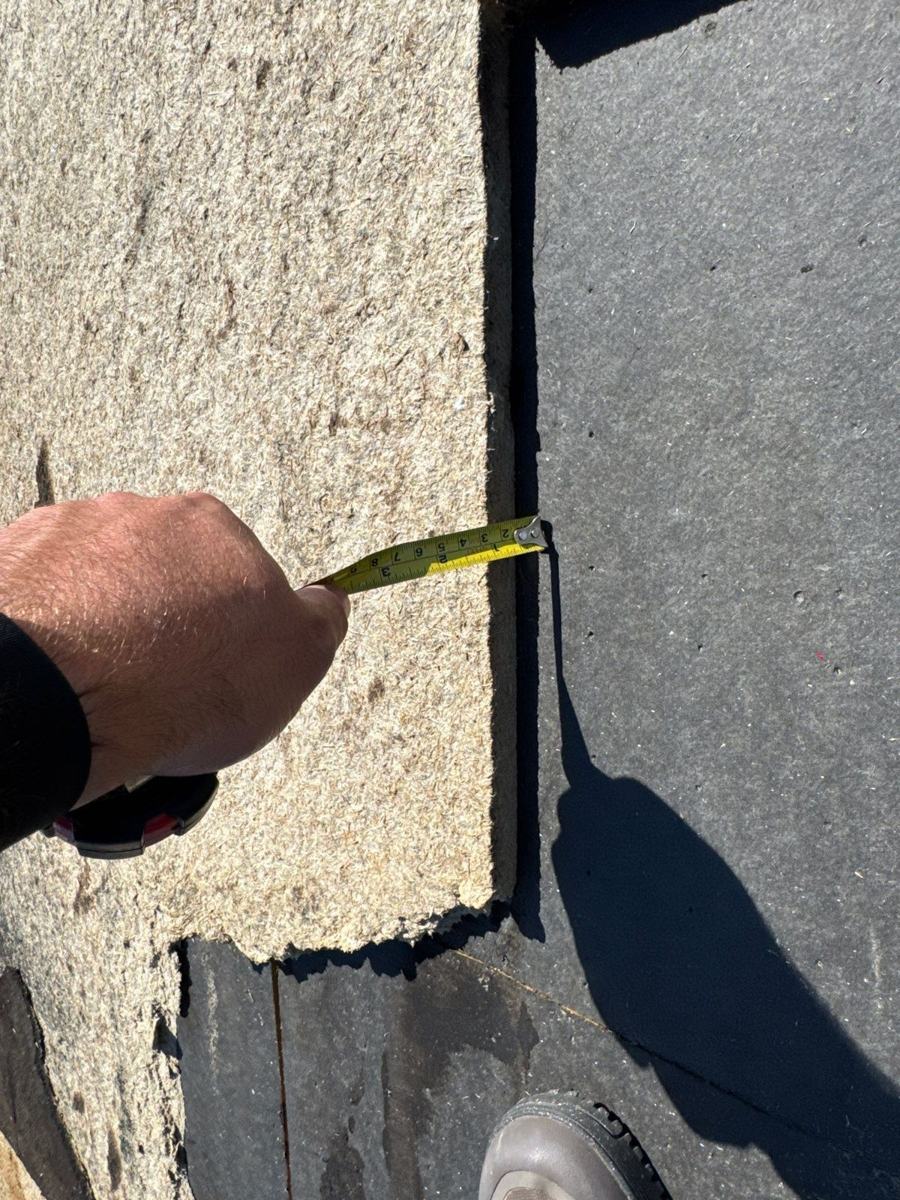
Our inspection photographs document substantial separation or loss of upper roof layers, exposed underlying material, folds and displaced roofing. Weathered surfacing and cracking were also visible in the photographed areas. These conditions call for evaluation even when no interior leak has been reported.
Wind-related separation was reported during the assessment, and the visual findings support investigating that explanation. The photographs alone cannot establish the exact failure sequence, concealed conditions or the extent of damage across the entire section.
Rooftop staging and flashing details deserve a closer look
The site assessment raised two more concerns. The damaged area had reportedly been used for staging, and our team identified concerns with corner flashing at an adjoining TPO roof area. Both are possible contributing conditions, not established causes of the modified-bitumen failure.
Foot traffic is one potential source of roof damage, and maintenance should account for it. [3] For the staging area, useful questions include what was stored, how loads were distributed, whether protection was used, and whether damage or movement was recorded before the storm.
One working hypothesis is that staging loads and traffic contributed to deterioration or loss of bond, leaving part of the assembly more vulnerable to wind. Weight and traffic alone do not establish that adhesion failed; the existing construction and separation surfaces need to be examined.
The TPO corner flashing needs its own review: document attachment, terminations and lifted components; compare the installation with the requirements for that assembly; and establish its relationship to the modified-bitumen damage before identifying it as the starting point or a cause of additional damage.
Roof damage can go unnoticed for weeks
According to the site account, this condition was not discovered until our October inspection. If the roof opened during the August 22 storm, it could have been exposed for almost seven weeks before discovery. That is a possible timeline, not a confirmed failure date.
An interior leak log cannot show whether roof layers have lifted or flashing has moved. A prompt inspection identifies exposed areas sooner so protection and commercial roof repairs can be arranged. It also creates a dated record for comparison.
What a post-storm roof inspection should document
Once qualified personnel can safely access the roof, the assessment should record:
- Displaced, lifted or separated membrane and roof layers.
- Loose or damaged edge metal, corner flashing and wall flashing.
- Damaged penetrations, curbs and equipment connections.
- Debris impacts and punctures.
- Changes around equipment, staging areas and traffic paths.
- Photographs tied to roof sections for comparison with earlier records.
These observations help document potential wind effects. [2] Where layers have separated, the assessment also needs to establish the affected boundaries and evaluate the assembly underneath. A moisture assessment or authorized test cuts may be appropriate. Exposed or unstable areas need a defined protection plan while permanent work is evaluated.
Owners can help by gathering previous inspection reports, maintenance records, rooftop work and staging history, interior leak reports, and photographs from before or shortly after the storm. These records help distinguish observed damage from assumptions about its cause.
Using the findings to plan phased roof replacement
For this facility, the inspection is informing a proposal for replacement of the affected section. It does not establish that every roof area needs replacing. Across a large operating property, each section should be assessed on its own condition and the consequences of failure for the operations below.
A phased capital plan separates immediate protection needs, repairable areas and future replacement projects. Each phase needs defined boundaries, a measured scope and planned connections to the roof that remains in service. Budgets should account for access, production protection, drainage and allowances for concealed conditions.
Sections awaiting replacement still need inspections and preventive roof maintenance. Updating records after significant weather and rooftop work helps the facility team adjust priorities as conditions change.
Frequently asked questions
Can a commercial roof have wind damage without leaking?
Yes. Wind can lift, separate or displace roof layers and flashing without an immediate interior leak report. On this Memphis roof, substantial layer separation was documented with no leaks reported beneath the inspected section.
When should a commercial roof be inspected after a windstorm?
As soon as qualified personnel can safely access it. A prompt inspection identifies exposed areas sooner so protection and repairs can be arranged, and creates a dated record of the roof’s condition.
Can rooftop staging or foot traffic damage a commercial roof?
Repeated traffic and stored loads can damage roofing, particularly where the assembly is already compromised. Whether staging contributed to a specific failure requires evidence about the loads, protection, prior condition and actual separation surfaces.
What should a post-storm roof assessment include?
Photographs tied to roof sections, notes on displaced membrane, loose edge and corner flashing, damaged penetrations, debris impacts and changes around equipment. Separated layers also warrant evaluation of the underlying assembly.
Does a damaged section mean the whole roof needs replacing?
No. Each section should be assessed on its own. A phased plan can address immediate protection, repair suitable areas and schedule replacement where it is justified.
PLAN YOUR NEXT STEP
Schedule a commercial roof inspection in Memphis
If your property experienced damaging winds or rooftop staging activity, an inspection can help document its present condition and identify the next steps. Tell us about your property, roof history and main concerns.
Request a roof inspection901-581-9382 · team@thesvcgroup.com
We review location, scope and availability before confirming a visit. Submitting a request does not reserve an appointment.
Project status: inspection and proposal development. The Service Group has not completed replacement work at this facility. Client details are withheld.
References
- MLGW — Bow Echo Storm Restoration Update, August 23, 2026. Regional storm context, not a site-specific wind measurement.
- FEMA — Roof Systems: Low-Slope Roofs.
- GAF — Scheduled Maintenance Checklist. General guidance, not a finding about this facility.